
Imagine two students preparing for the same science exam.
The first student spends hours memorising definitions, formulas, and textbook answers. The second student asks questions like, “Why does this happen?”, “How does it work?”, and “Can I prove it with an experiment?”
Both students may score well in the short term, but years later, who is more likely to remember the concepts, solve real-life problems, and enjoy learning?
The answer is simple: the curious learner.
At Igniters Science Club, an initiative of Igniters for Tomorrow, we believe that true education begins with curiosity. Memorisation has its place, but curiosity transforms information into understanding and helps students become confident, independent thinkers.
Let’s explore why curiosity is far more powerful than memorisation and how parents and students can develop this essential habit.
What Is Memorization?
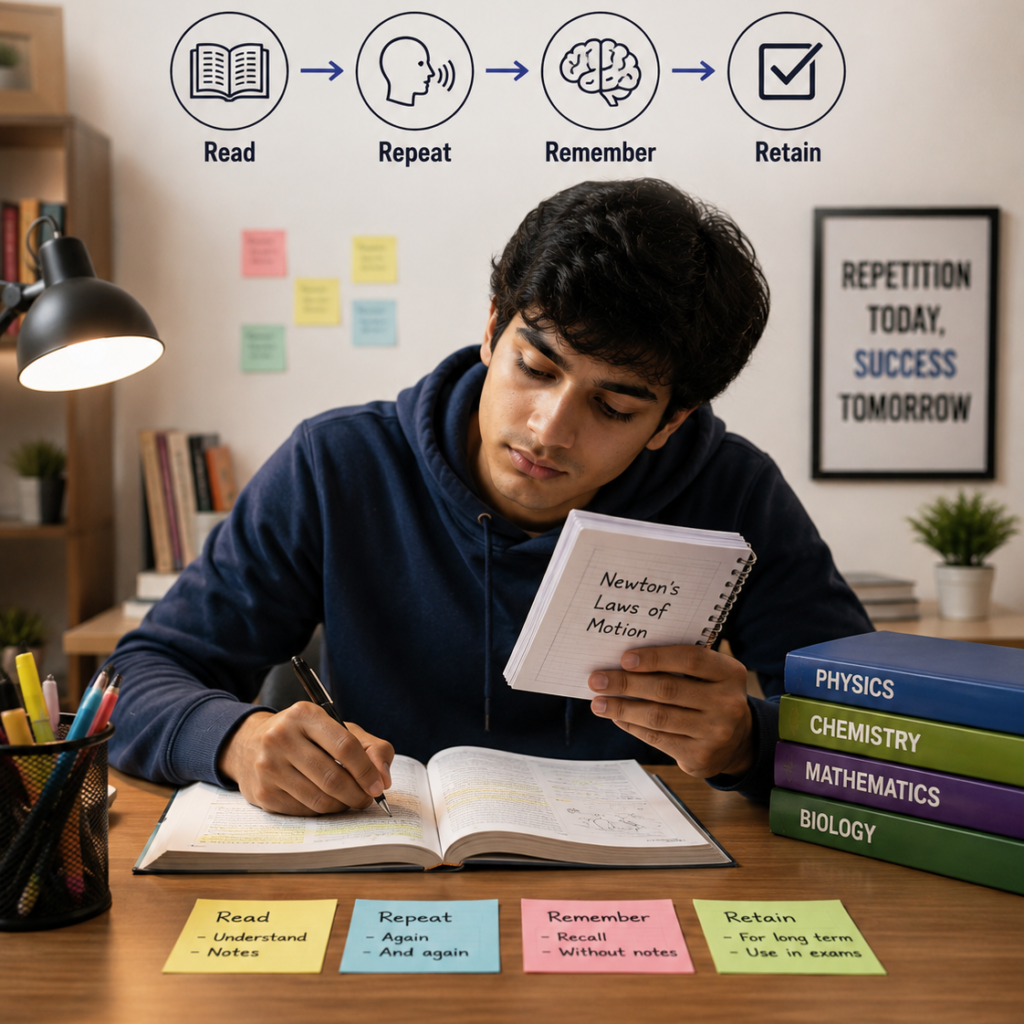
Memorisation is the process of remembering information by repeating it again and again.
Students often memorise:
- Definitions
- Formulas
- Dates
- Vocabulary
- Answers to expected questions
Memorisation can be useful, especially for facts that need to be recalled quickly. However, if students only memorise without understanding the ideas behind them, learning becomes temporary.
Many students forget what they studied just a few weeks after an exam because they memorised the answers instead of understanding the concepts.
What Is Curiosity?
Curiosity is the desire to learn, explore, and discover something new.
Curious students don’t stop after reading a chapter. They ask questions like:
- Why does the Moon change its shape?
- How do airplanes fly?
- Why do magnets attract only certain metals?
- What would happen if gravity disappeared?
These questions encourage deeper thinking and lead to meaningful learning.
Curiosity turns learning into an adventure rather than a task.
Why Curiosity Leads to Better Learning

When students are curious, their brains become more engaged.
Instead of simply remembering information, they connect new ideas with what they already know. This makes learning more enjoyable and helps concepts stay in memory for a much longer time.
For example, a student who understands why seasons change is far more likely to remember the concept than someone who only memorises the definition from a textbook.
Understanding creates lasting knowledge.
Is Memorization Always Bad?
Not at all.
Memorisation is still important in education.
Students need to remember multiplication tables, scientific symbols, mathematical formulas, vocabulary, and important facts.
The problem begins when memorisation becomes the only method of learning.
The best learners first understand a concept and then memorise the information they need to recall quickly.
In other words:
Understand first. Memorise later.
A Simple Example
Imagine you’re learning to ride a bicycle.
Would you learn by memorising every step from a book?
Of course not.
You learn by trying, falling, balancing, observing, and improving.
Science and Mathematics work in a similar way. Concepts become clear when students ask questions, solve problems, perform experiments, and apply what they have learned.
Learning is something you experience—not just something you remember.
How Parents Can Encourage Curiosity
Parents play an important role in shaping how children learn.
Instead of immediately answering every question, encourage children to think.
Ask questions like:
- “What do you think will happen?”
- “Why do you believe that?”
- “How could we find out?”
- “Can we test your idea?”
Simple activities such as gardening, cooking, observing insects, or watching the night sky can become exciting science lessons when children are encouraged to ask questions.
The goal isn’t to have all the answers—it’s to enjoy discovering them together.
How Students Can Become More Curious
Curiosity is a habit that anyone can develop.
Here are a few simple ways:
- Ask at least one new question every day.
- Read beyond your school textbook.
- Perform simple science experiments at home.
- Solve puzzles and brain teasers.
- Watch documentaries about nature and space.
- Keep a curiosity journal and write down interesting questions.
- Don’t be afraid to make mistakes while learning.
The more questions you ask, the stronger your thinking becomes.
Curiosity Builds Skills for the Future

In today’s world, success depends on much more than remembering facts.
Employers, researchers, engineers, doctors, and scientists all rely on skills such as:
- Critical thinking
- Problem-solving
- Creativity
- Observation
- Logical reasoning
- Decision-making
Curiosity helps students develop all these abilities naturally.
It prepares them not only for examinations but also for real-life challenges.
Learning Beyond Marks
Scoring good marks is important, but education has a much bigger purpose.
The most successful learners don’t study only to pass exams—they study because they genuinely want to understand how the world works.
When curiosity becomes a habit, students stop asking, “Will this come in the exam?”
Instead, they begin asking,
“How does this actually work?”
That simple shift changes the way they learn forever.
Final Thoughts
Memorisation may help students remember information for an examination, but curiosity helps them remember it for life.
The best education combines both: understand deeply, then remember confidently.
At Igniters Science Club, an initiative of Igniters for Tomorrow, we encourage students to move beyond rote learning and become curious explorers. Through hands-on activities, inquiry-based learning, and concept-focused teaching, we help young minds ask better questions, think critically, and develop a genuine love for science.
Because the greatest discoveries in history didn’t begin with someone trying to memorise an answer.
They began with someone asking a simple question:
“Why?”
Leave a Reply