
🌌 Have You Ever Seen the Ocean Glow at Night?
Imagine walking along a beach on a dark night and suddenly seeing the waves sparkle with brilliant blue light. It might seem like magic, but it’s actually science!
This incredible natural phenomenon is called bioluminescence—the ability of living organisms to produce their own light. From tiny plankton in the ocean to glowing mushrooms in forests, bioluminescence is one of nature’s most fascinating wonders.
Let’s dive into this glowing world!
💡 What Is Bioluminescence?
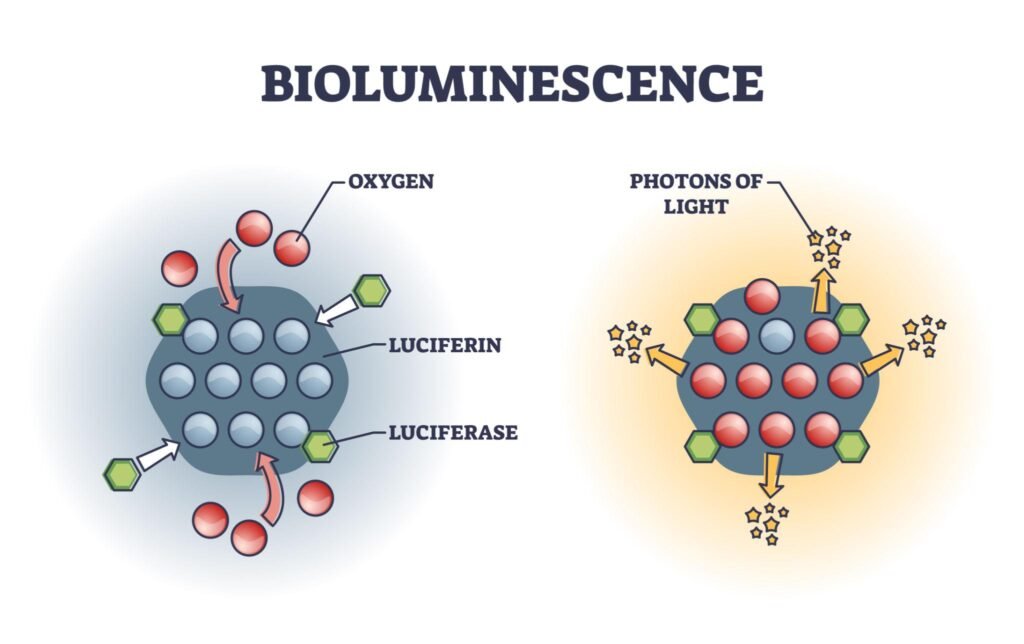
Bioluminescence comes from two Greek words:
- Bio = Life
- Luminescence = Light
It means “light produced by living organisms.”
Unlike a light bulb, living organisms create light through a chemical reaction inside their bodies.
The main ingredients are:
- 🧪 Luciferin – a light-producing chemical
- ⚡ Luciferase – an enzyme that speeds up the reaction
- 🌬 Oxygen
When these combine, they produce cold light, meaning almost no heat is released.
That’s why bioluminescent animals can glow without getting hot!
🌊 Where Can We Find Bioluminescent Organisms?
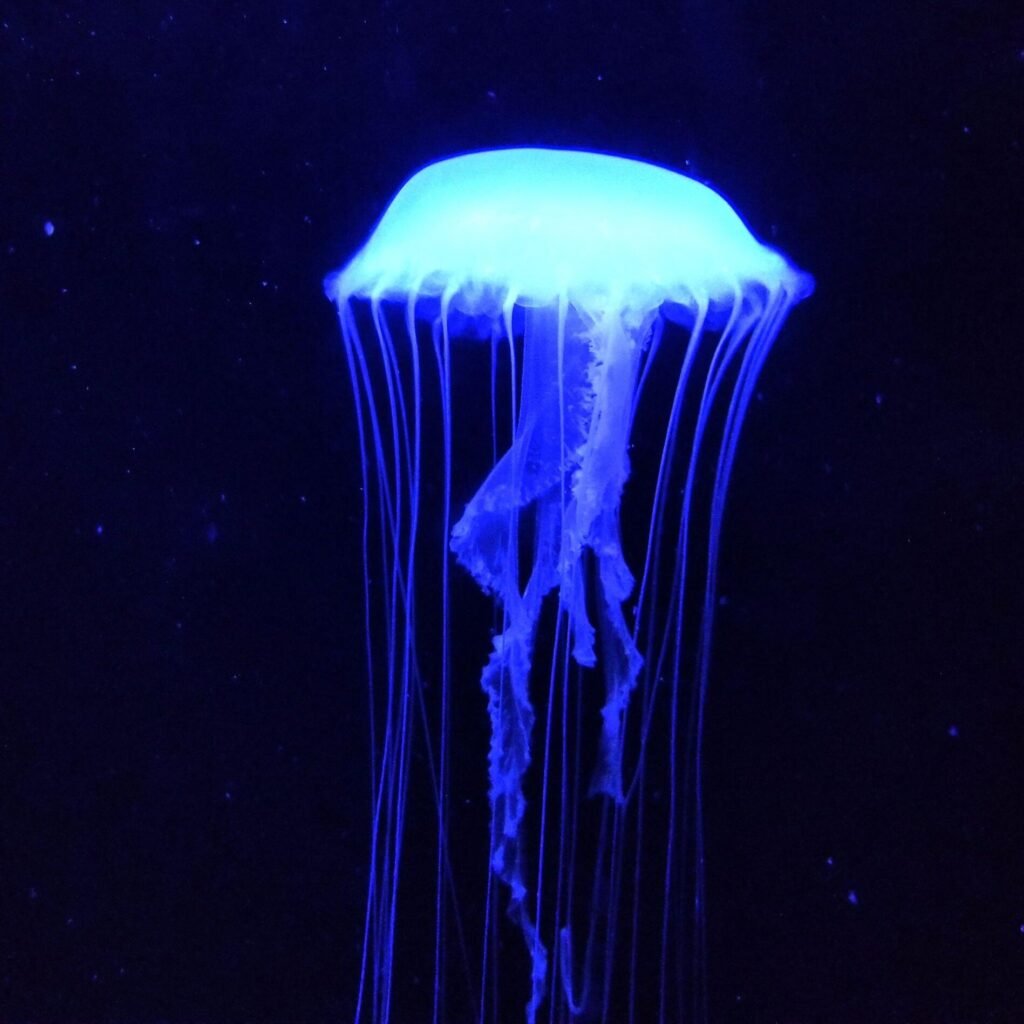
Bioluminescent organisms live in many different places around the world.
🌊 In the Ocean
More than 75% of deep-sea animals can produce light!
Examples include:
- Jellyfish
- Squid
- Anglerfish
- Tiny plankton
🌳 On Land
Some land organisms glow too, such as:
- Fireflies
- Glow worms
- Certain mushrooms
- Some insects
🐟 Why Do Animals Glow?
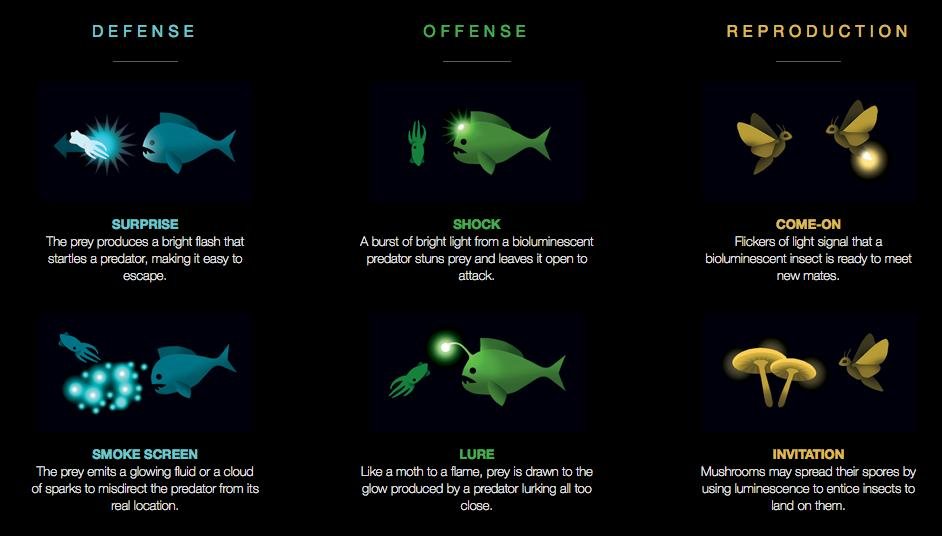
Animals don’t glow just to look beautiful—they glow for survival!
To Find a Mate ❤
Fireflies flash different light patterns to attract partners. Each species has its own unique flashing “language.”
To Catch Food 🍽
The deep-sea anglerfish has a glowing lure hanging above its mouth. Small fish swim toward the light…
…and become dinner!
To Escape Predators 🦑
Some squid release glowing clouds into the water. The bright flash confuses predators while the squid quickly escapes.
To Communicate 📡
Some marine animals use light signals to communicate with others of their species.
🌍 The Science Behind the Glow
Scientists study bioluminescence because it has many real-world uses.
Bioluminescent proteins have helped researchers:
- Study diseases
- Track cancer cells
- Develop new medicines
- Understand how cells work
One glowing protein called Green Fluorescent Protein (GFP) has become one of the most important tools in modern biology.
🌟 Amazing Bioluminescent Creatures
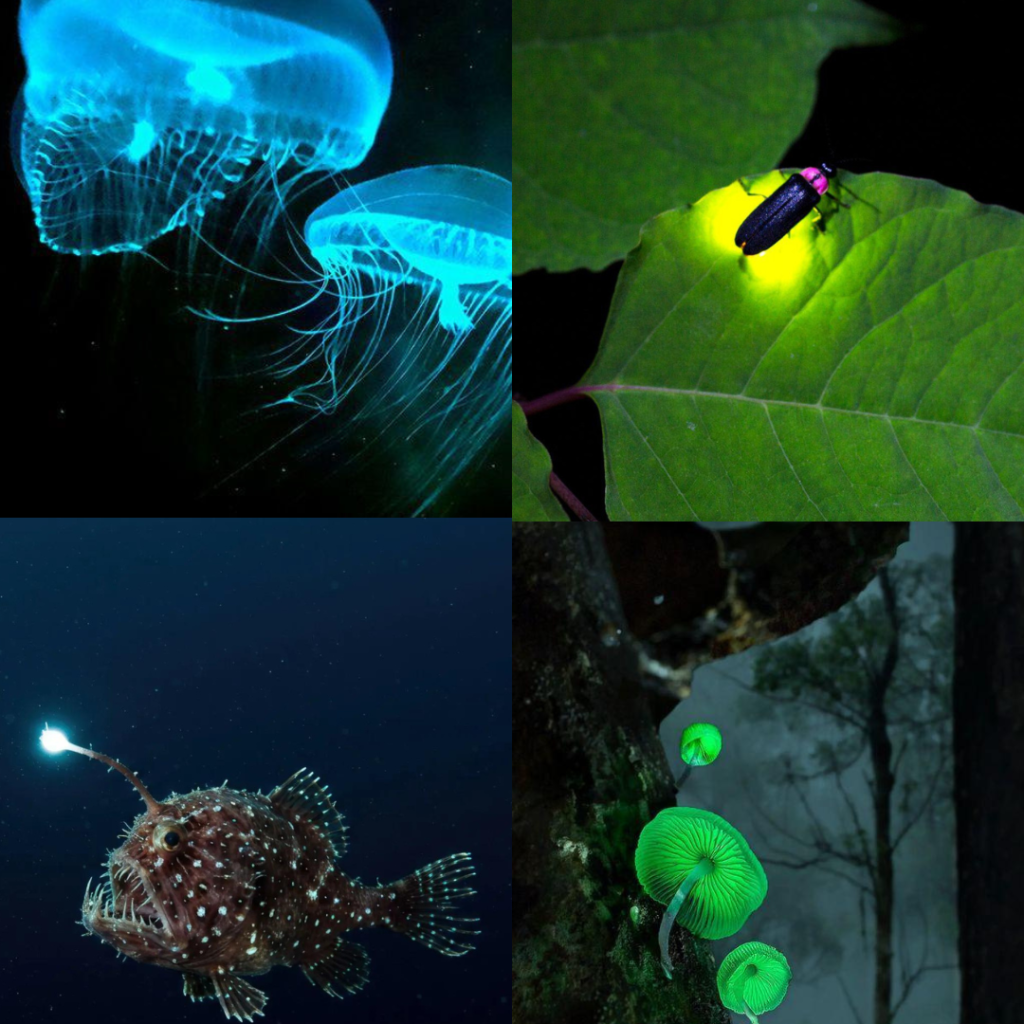
🪼 Crystal Jelly
Produces a beautiful blue-green glow.
🪲 Firefly
Uses flashing lights to communicate.
🐟 Anglerfish
Uses a glowing lure to hunt prey.
🍄 Glowing Mushrooms
Light up forest floors at night with a soft green glow.
Can You See Bioluminescence in India?
Yes! During certain seasons, glowing blue waves have been seen at:
- 🌊 Mattu Beach (Karnataka)
- 🌊 Betalbatim Beach (Goa)
- 🌊 Some coastal areas of Maharashtra
These glowing waves are usually caused by tiny marine plankton called dinoflagellates.
🤯 Did You Know?
✨ Fireflies create one of the most energy-efficient lights in nature.
✨ More than 1,500 species of fish can produce light.
✨ Scientists use glowing proteins to study human cells.
✨ Some mushrooms glow all night long!
✨ Most bioluminescent animals live in the deep ocean, where sunlight never reaches.
🌟 Final Thoughts
Bioluminescence reminds us that nature is full of incredible surprises. Whether it’s a glowing beach, a flashing firefly, or a mysterious deep-sea fish, these natural lights show how science can be more amazing than fiction.
The next time you see a firefly lighting up the night, remember—it’s carrying its own tiny lantern, powered by one of the most fascinating chemical reactions in nature!
Leave a Reply