
Imagine waking up one morning to discover that a nearby volcano is about to erupt or that an earthquake may strike your city. Could scientists warn us in advance?
Earthquakes and volcanic eruptions are among the most powerful natural events on Earth. While scientists cannot accurately predict the exact time and place of most earthquakes, they can monitor warning signs and provide valuable forecasts for volcanoes and earthquake risks.
Let’s explore how science helps us understand these amazing—and sometimes dangerous—forces of nature.
What Causes Earthquakes?
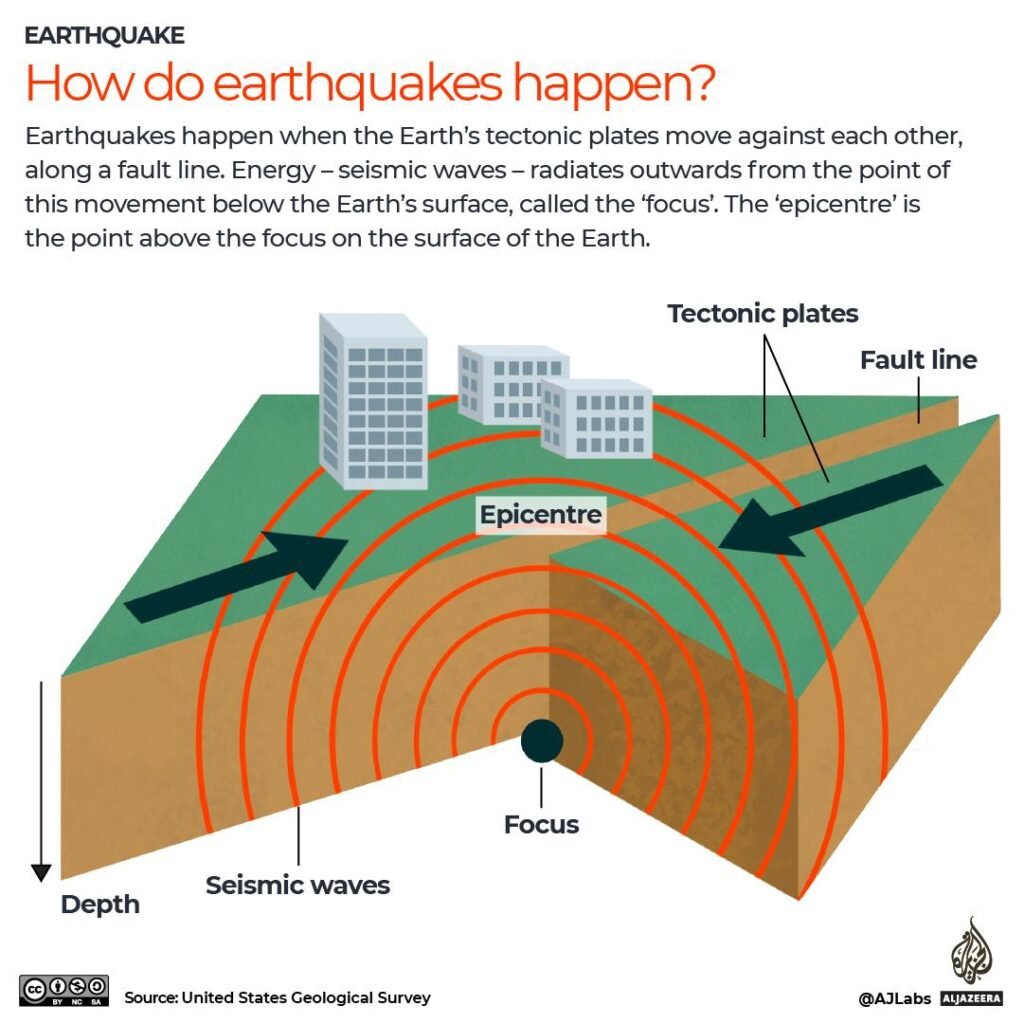
The Earth’s outer layer is divided into giant pieces called tectonic plates. These plates are constantly moving, although very slowly.
Sometimes, the plates get stuck. As pressure builds up, they suddenly slip, releasing enormous amounts of energy.
This sudden release of energy causes an earthquake.
🌟 Did You Know?
The Earth’s tectonic plates move about 2–10 cm every year, roughly as fast as your fingernails grow!
How Do Scientists Detect Earthquakes?
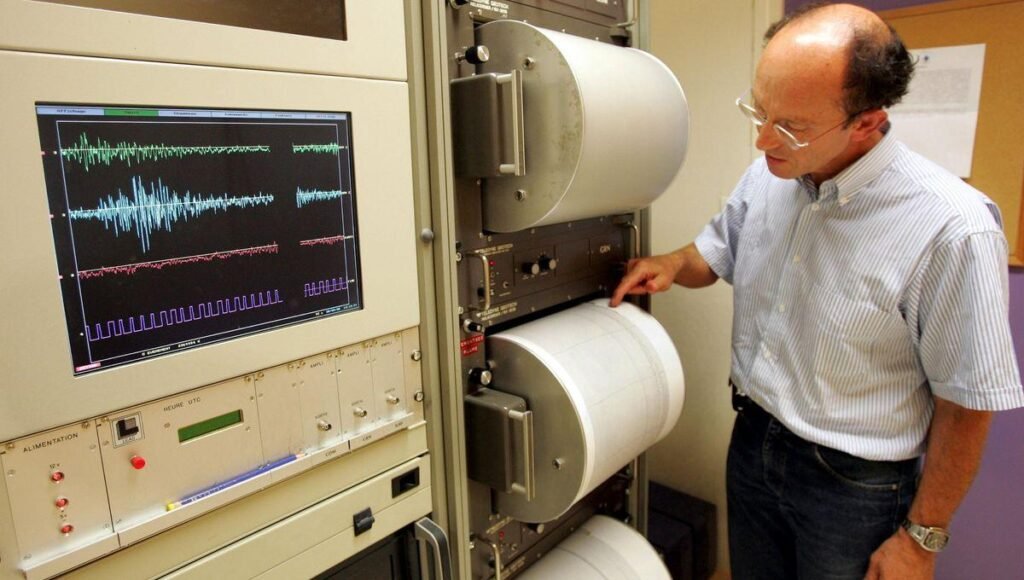
Scientists use special instruments called seismographs.
A seismograph records tiny vibrations in the Earth’s crust, known as seismic waves.
By comparing information from many monitoring stations, scientists can determine:
- Where an earthquake occurred
- Its magnitude
- When it happened
- How deep underground it was
Modern monitoring networks can detect even very small earthquakes.
Can Earthquakes Be Predicted?
This is one of the biggest questions in Earth science.
The answer is:
❌ Scientists cannot predict the exact day, time, or location of an earthquake.
However, they can:
- Identify earthquake-prone regions.
- Monitor active fault lines.
- Estimate long-term earthquake risks.
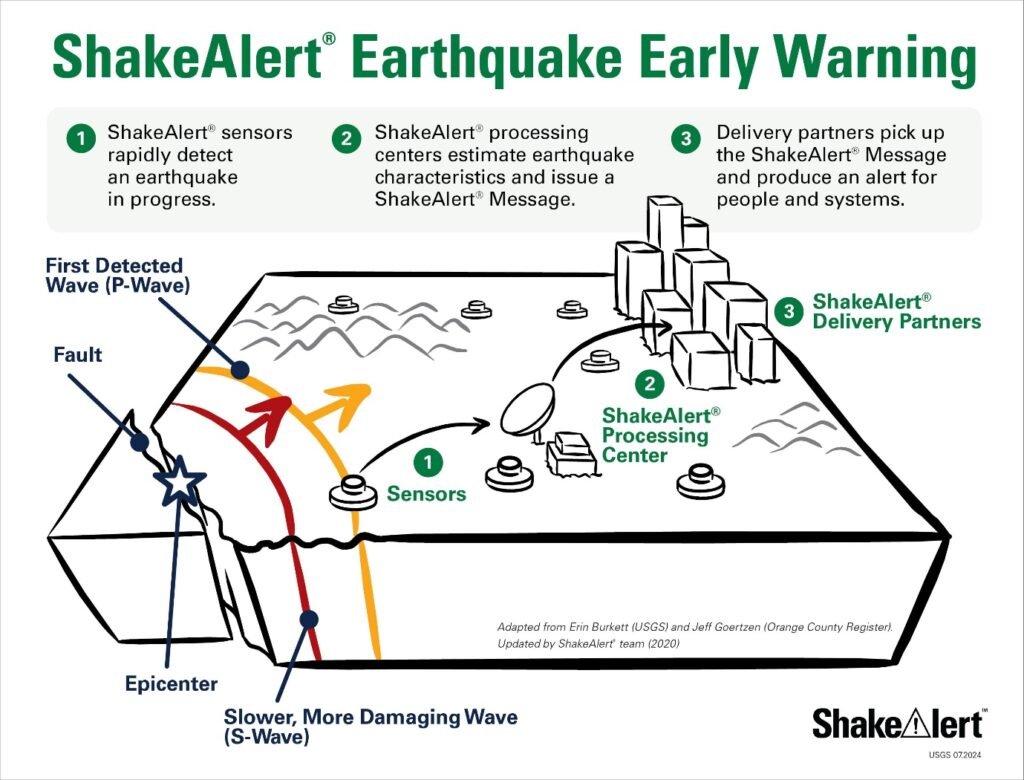
- Provide early warnings after an earthquake begins but before the strongest shaking reaches nearby areas.
Even a warning of 10–60 seconds can help people move to safety and allow trains and factories to stop automatically.
What Causes Volcanoes to Erupt?
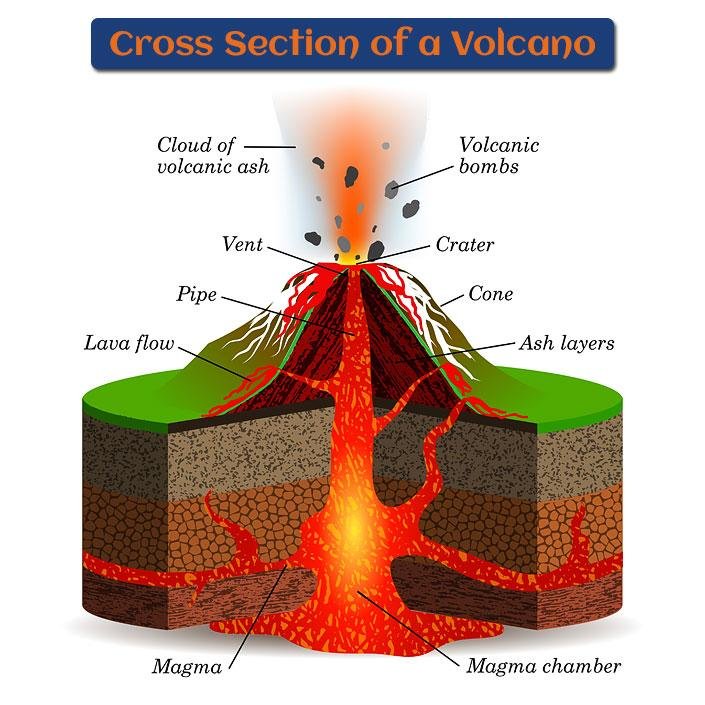
Deep inside the Earth lies extremely hot molten rock called magma.
When pressure builds beneath the surface, magma rises through cracks and eventually erupts as lava, ash, and gases.
Some volcanoes erupt every few years, while others remain quiet for centuries.
How Scientists Monitor Volcanoes
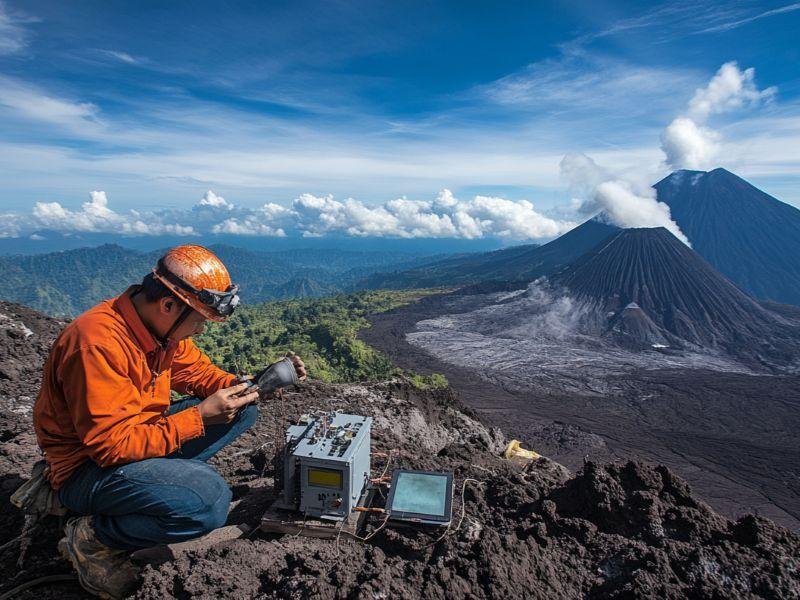
Unlike earthquakes, volcanoes often show warning signs before erupting.
Scientists watch for:
🌎 Small Earthquakes
- Rising magma causes tiny earthquakes beneath the volcano.
📏 Ground Swelling
- GPS satellites detect when the ground begins to bulge.
🌡 Temperature Changes
- Thermal cameras reveal hotter areas around the volcano.
🌫 Gas Emissions
- Instruments measure gases like sulfur dioxide escaping from underground.
🛰 Satellite Images
- Satellites monitor changes in shape, heat, and ash clouds.
By combining all these clues, scientists can estimate when an eruption is becoming more likely.
Technology Makes Predictions Better
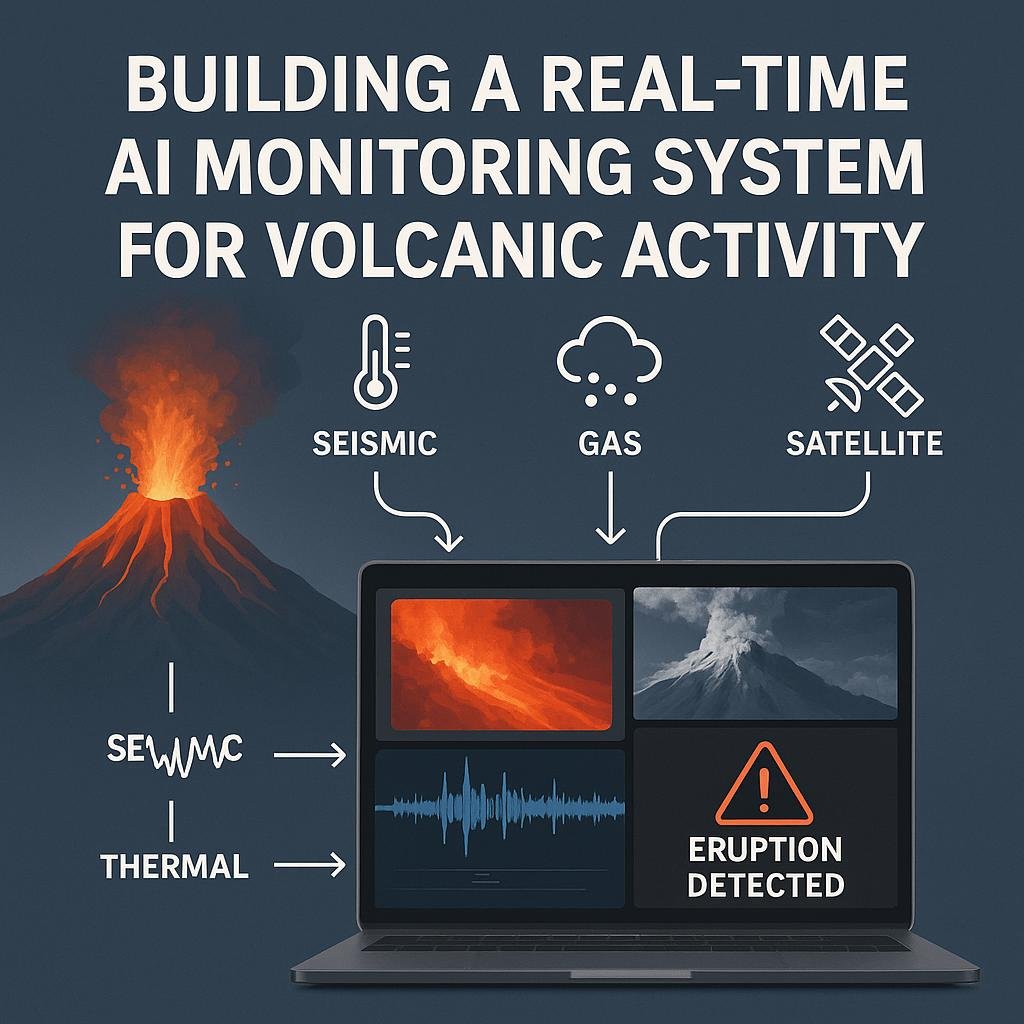
Today’s scientists use advanced technology, including:
- 🛰 Earth-observing satellites
- 📡 GPS sensors
- 🌡 Thermal cameras
- 📊 Powerful computers
- 🤖 Artificial Intelligence (AI)
AI can analyze huge amounts of data and detect patterns that humans might miss, helping improve forecasts.
Why Early Warnings Save Lives
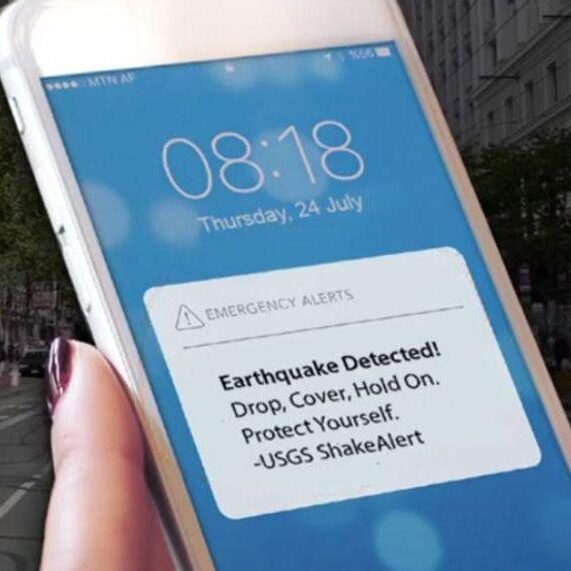
Although earthquakes cannot yet be predicted precisely, early warning systems can save lives.
Warnings can:
- Stop trains
- Shut down gas lines
- Pause factory machinery
- Alert hospitals
- Give people a few precious seconds to take cover
For volcanoes, early warnings allow communities to evacuate before an eruption begins.
Famous Examples
🌋 Mount St. Helens (1980)
Scientists observed increased earthquakes and ground swelling before the eruption, helping authorities warn nearby communities.
Japan’s Earthquake Warning System
Japan has one of the world’s fastest earthquake early warning systems, sending alerts to millions of people within seconds.
Amazing Earth Facts
- 🌍 The Earth experiences about 500,000 earthquakes every year.
- 📊 Around 100,000 can be felt by people.
- ⚠ Only about 100 cause major damage annually.
- 🌋 There are around 1,350 potentially active volcanoes on Earth.
- 🛰 Thousands of satellites continuously monitor our planet.
How Can You Stay Safe?
If you live in an earthquake-prone area:
- Drop, Cover, and Hold On.
- Stay away from windows.
- Keep an emergency kit ready.
- Follow official safety instructions.
If you live near a volcano:
- Know evacuation routes.
- Listen to emergency alerts.
- Wear a mask during ashfall.
- Stay indoors if advised.
Conclusion
Nature is incredibly powerful, but science is helping us understand it better every day.
While scientists cannot yet predict the exact time of earthquakes, they can detect risks and provide valuable early warnings. Volcanoes are often easier to forecast because they usually show clear signs before erupting.
With satellites, seismographs, GPS, AI, and dedicated researchers around the world, our ability to monitor Earth’s activity continues to improve—making communities safer and better prepared.
The more we learn about our planet, the better we can protect ourselves.
Leave a Reply